Introduction
The retail business is one of the most dynamic sectors in the global economy. It connects producers with consumers and plays an important role in daily life. From small convenience stores to large supermarkets and online marketplaces, retail businesses provide products and services that meet customer needs. However, the retail industry is also highly competitive, requiring business owners to continuously improve their strategies.
Understanding the Retail Business
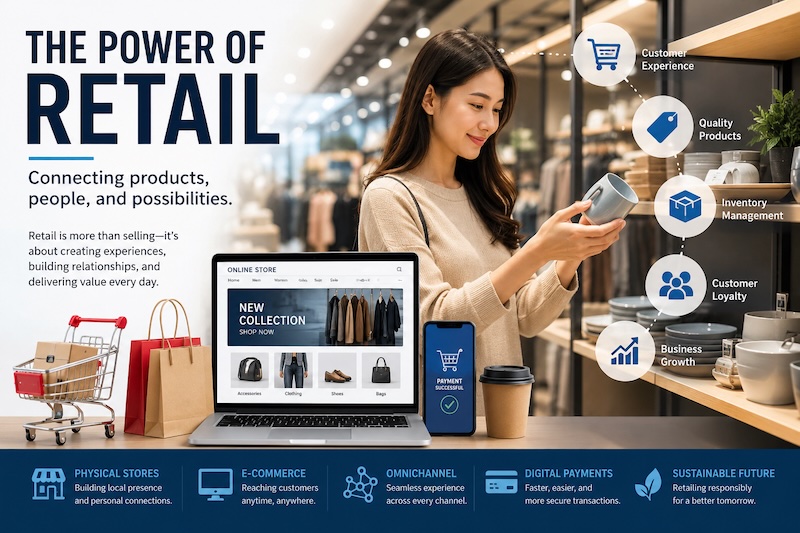
Retail refers to the sale of goods or services directly to customers for personal use. A retailer buys products from manufacturers or wholesalers and sells them to end users. Retail businesses can operate through physical stores, online platforms, social media, mobile applications, or a combination of these channels.
Successful retail businesses understand their target market, offer the right products, set competitive prices, and create a pleasant shopping experience. They must also manage inventory, customer service, marketing, and financial planning effectively.
Key Challenges in Retail
1. Strong Competition
Retailers face competition from both local stores and large online platforms. Customers can compare prices and products easily, so retailers must offer unique value.
2. Changing Customer Behavior
Modern customers expect convenience, fast service, quality products, and personalized experiences. Retailers must adapt to these expectations to stay relevant.
3. Inventory Management
Poor inventory control can lead to overstock, product shortages, or financial losses. Accurate demand forecasting is essential for retail success.
Strategies for Retail Success
To succeed in the retail business, companies need clear and practical strategies. First, retailers should focus on customer experience. Friendly service, clean store layouts, easy payment systems, and fast delivery can increase customer satisfaction.
Second, retailers should use digital technology. Online stores, social media marketing, customer databases, and digital payment systems can help retailers reach more customers and operate more efficiently. Even small retailers can benefit from simple digital tools to promote products and communicate with buyers.
Third, retailers need strong branding. A memorable brand helps customers recognize and trust a business. Branding includes the store name, logo, product quality, service style, and overall customer impression.
The Role of E-Commerce
E-commerce has transformed the retail industry. Customers can now shop anytime and anywhere using smartphones or computers. This change creates new opportunities for retailers to expand beyond physical locations. However, it also requires businesses to improve their online presence, product photos, descriptions, delivery systems, and customer support.
A strong retail business today often combines offline and online channels. This approach is known as omnichannel retail. For example, customers may discover products on social media, check availability online, and purchase them in a physical store.
Conclusion
The retail business offers many opportunities, but it also requires careful planning and continuous innovation. Retailers who understand customer needs, use technology wisely, manage inventory effectively, and build strong relationships with customers are more likely to grow in a competitive market. In the future, successful retail businesses will be those that combine convenience, trust, quality, and excellent service.