The $237B market — and why it's not slowing down
The global cafe market crossed $237 billion in 2026, and projections show no sign of deceleration. What was once a slow-moving, locally anchored industry has become one of the world's most dynamic hospitality sectors driven by urbanization, a global middle class with rising disposable income, and a cultural shift toward experience-based spending.
But growth in market size doesn't automatically mean growth in profitability. In fact, as the market expands, competitive pressure intensifies and cafe businesses that lack strong financial foundations are the first to feel the squeeze. Understanding the forces shaping this market is no longer optional for owners who want to grow sustainably.
The top 20% of cafe businesses globally capture 65% of category profits. The differentiator is almost never the product alone it's operational discipline, financial visibility, and the ability to scale systems before scaling locations.
Real time financial visibility is the new competitive edge
Ask most cafe owners how their margin looks this month, and you'll get a guess not a number. This is the most pervasive problem in the industry: decisions about menu pricing, staffing, and expansion are made on intuition rather than data. The cafes pulling ahead in 2026 are those that have solved this problem.
Multi-outlet cafe chains across Southeast Asia, Europe, and the Americas are rapidly adopting cloud-based accounting platforms. Owners who track cash flow, cost of goods sold (COGS), and profit margins in real time are outpacing competitors by an average of 23% in revenue growth not because they're working harder, but because they're making better decisions faster.
Zayeen automatically calculates all four of these metrics in real time pulling from your POS data, supplier invoices, and bank transactions. No spreadsheets. No month end surprises.
Sustainability has moved from differentiator to baseline expectation
Five years ago, a zero waste cafe was a novelty that earned press coverage. Today, it's increasingly a minimum requirement for a significant and growing segment of urban cafe-goers. In London, Tokyo, Melbourne, and Jakarta alike, consumers are auditing their purchasing choices through an environmental lens.
The financial case for sustainability is also stronger than it used to be. Reducing food waste by 30% achievable through better inventory forecasting directly improves COGS. Energy-efficient equipment, while requiring upfront capital, typically pays back within 18–24 months in markets with high utility costs.
The "Third Place" is back — and it's rewriting revenue models
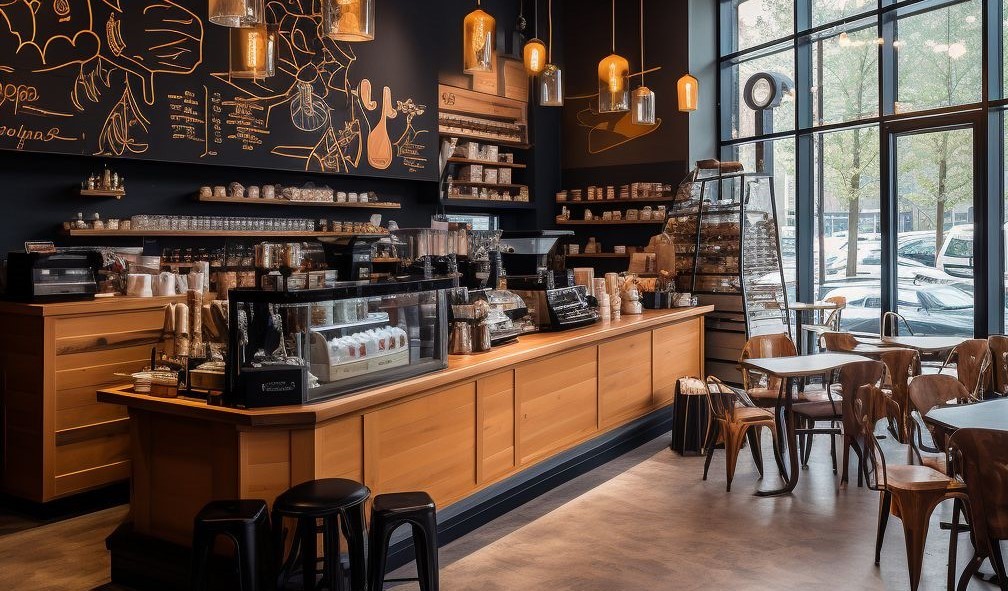
Sociologist Ray Oldenburg's concept of the "third place" — a social environment separate from home and work — was declared dead during the pandemic. It has returned with surprising force. Post-pandemic consumers are redefining the cafe as a social anchor, and operators who understand this shift are engineering their spaces and menus to capitalize on it.
"The most valuable real estate in a cafe isn't the counter — it's the environment you create for someone to want to stay for three hours instead of thirty minutes."
Average dwell times have risen 40% globally versus 2022, driven by remote workers, students, and a creative class that treats cafes as co-working spaces. The financial implication is significant: higher dwell time requires a different revenue model. Minimum spend policies, table fees, and subscription models (unlimited coffee for a monthly fee) are all being tested and validated by leading operators.
A 60-seat cafe in Singapore introduced a $8/hour table fee with unlimited filter coffee after 11am on weekdays. Revenue per seat per hour increased by 34%. Customer complaints were minimal the audience self-selected into those who valued the space, improving the overall in-cafe experience for everyone.
Technology & AI are separating the efficient from the struggling
Technology adoption in cafe operations has accelerated dramatically. But the most impactful implementations aren't consumer-facing they're back-of-house. AI-driven inventory management, predictive staffing, and integrated accounting are delivering measurable financial results for operators who have implemented them.
- AI inventory forecasting predicts daily demand by hour based on weather, local events, and historical patterns reducing over-ordering waste by 25–30% and preventing stock-outs during peak periods.
- POS-to-accounting integration eliminates manual data entry, closes books 2× faster, and surfaces margin data per menu item so you know within 24 hours which drinks are profitable and which are subsidizing others.
- Dynamic menu analytics identify underperforming items that are complex to prepare but generate low margin freeing kitchen capacity for high-margin items and improving overall throughput.
- Multi-branch financial consolidation gives group owners a single dashboard view of performance across all locations in real time, in any currency, without waiting for monthly reports from each manager.
Regional markets: where the growth is and what's driving it
Global trends don't play out uniformly. The cafe industry's growth story in 2026 is really four or five different stories, each shaped by local culture, economic conditions, and consumer behavior. Understanding these regional dynamics is essential for businesses considering expansion.
Critical financial metrics every cafe owner must track
Standard financial reports are necessary, but insufficient for running a cafe operationally. You need metrics that directly answer daily business questions: which items are most profitable? Is my morning rush generating enough to justify staffing levels? When should I restock espresso beans?
Zayeen generates all these metrics automatically from your POS and inventory data updated in real time, available on any device. No manual calculation. No waiting for your accountant's monthly summary.
Action steps to future-proof your cafe business
If you're running a cafe today whether one location or twenty these are the highest-leverage steps you can take right now to position yourself for the trends shaping 2026 and beyond. Ordered by immediate impact.
- Calculate your true contribution margin per top 10 menu items this week. Include all variable costs ingredients, packaging, platform fees if selling online. The result will surprise you and immediately guide pricing decisions.
- Connect your POS to your accounting system. Manual reconciliation of daily POS reports is one of the biggest time sinks in cafe operations and the source of most reporting errors. Automate it.
- Audit your waste for one week. Track what gets thrown away prepared food, expired ingredients, over-portioned drinks. Most cafes find 8–15% of COGS disappearing this way. This is your lowest-hanging margin recovery.
- Build a 13-week rolling cash flow forecast. The single most common cause of cafe business failure is not low sales it's running out of cash while waiting for a busy season. Forecasting 90 days ahead eliminates this risk.
- Implement a loyalty program before you expand. Understanding who your repeat customers are, what they order, and when they visit is the data foundation that makes multi-location economics work. Build this at one location before opening a second.
Cafe businesses that grow fast without strong financial foundations almost always hit a cash crisis typically when scaling up inventory ahead of a busy season, or when opening a second location too early. Building the right financial systems now, when your business is smaller, is exponentially easier and cheaper than fixing them when you have 50 menu items, 15 staff, and 3 locations.
Run your cafe's finances with full clarity
Zayeen connects your POS, inventory, and banking into one accounting system real margins per menu item, automated reconciliation, and financial reports that are always accurate without manual work.